A new generation is entering a world where knowledge is free and organisations are expensive. The question is no longer what you know. It is what you do with it.

VeldWorks is itself the proof of the thesis

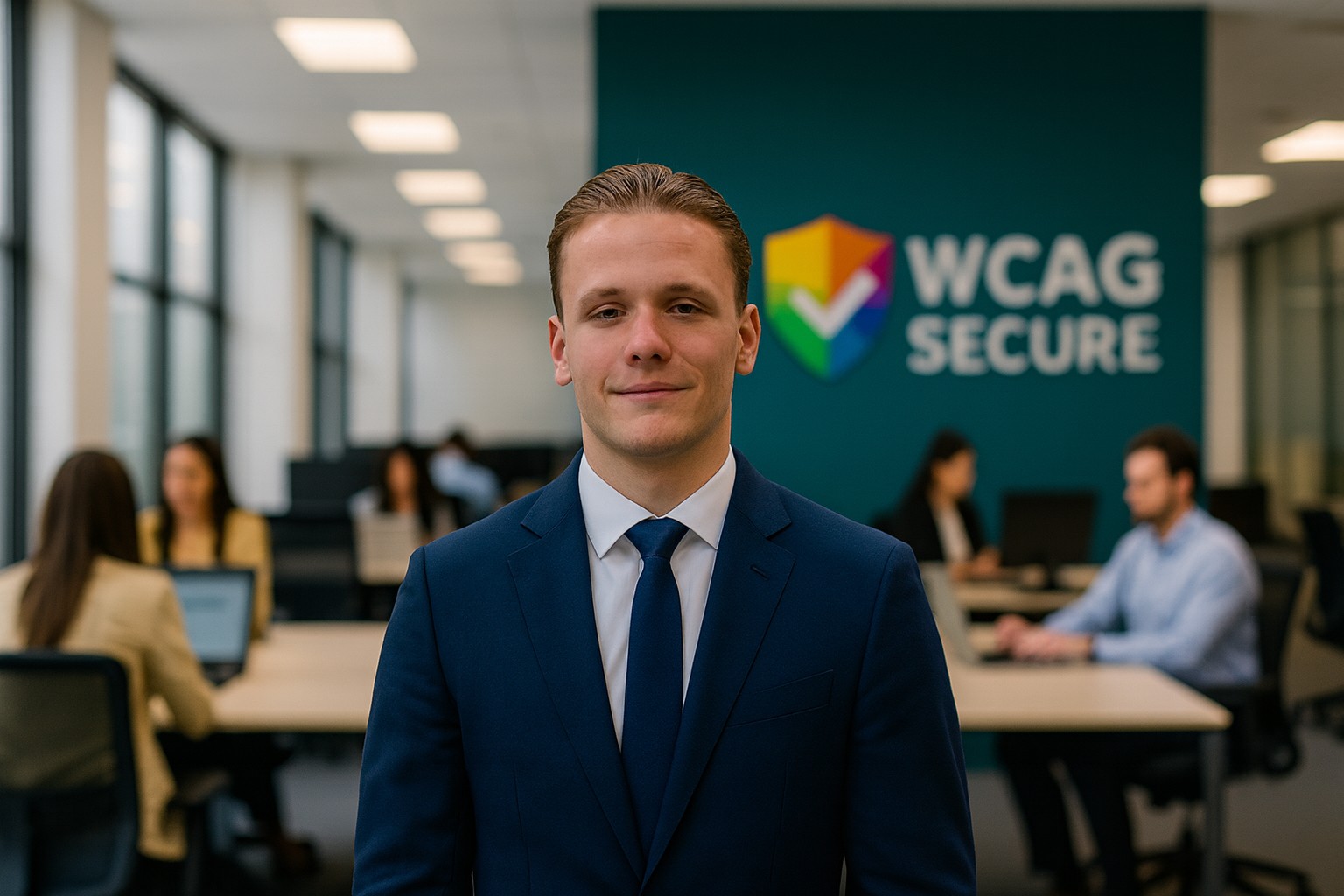
VeldWorks was founded by Reinout Wegman, a graduating student in Strategic Management at Radboud University Nijmegen. He grew up surrounded by stories and first-hand experience of leading large organisations — and grew up equally with AI. He has watched both worlds develop in parallel, and he sees what happens when they collide.

That collision is not a threat. It is an opening. VeldWorks is built on the conviction that one person with the right judgment, the right experience of how organisations actually work, and AI as an extension of reach and speed, can now achieve what previously required a team of hundreds.

The organisation does what it claims is possible. It operates on three simultaneous pillars: Know — continuously staying at the edge of new developments, concepts, and frameworks. Guide — working selectively with organisations genuinely ready to ask the hard question: what is our reason for existing when our founding assumptions no longer hold? Build — starting propositions and companies, proving the model in practice, not just in theory.

Proximity without co-option

Reinout Wegman grew up in a household shaped by the experience of leading large, complex organisations. His father led a publicly listed technology company as CEO for seventeen years. He absorbed that world through proximity: the decisions, the dilemmas, the weight of institutions.

At the same time, he grew up with AI. Not as a tool that arrived during his career, but as a permanent feature of the environment in which he was educated. He belongs to the first generation for whom the question of what AI changes is not abstract — it is the central question of their professional lives.

VeldWorks is founded on the intersection of those two inheritances: a deep, inherited understanding of how large organisations work — and a clear-eyed view of why the premises on which they were built are no longer holding. He sees the machine clearly because he grew up beside it, not inside it.

The bottleneck has shifted

Knowledge was always the bottleneck. Writing let it cross time. The printing press let it scale. The internet made it universal. But through all of these breakthroughs, one thing remained constant: a human being had to learn. Someone had to invest time and effort.

AI breaks this entirely. When an AI system learns something, that knowledge propagates instantly. The bottleneck has shifted. The question is no longer how fast knowledge spreads — but how fast it is applied.

Three things remain irreplaceable: the ability to see where the opportunity is before the data confirms it, the will to act, and the courage to believe the consensus is wrong. Not skills. Character traits. In a world where knowledge is free, these become the only things that are genuinely scarce.

Reinout Wegman belongs to the first generation that has never known a world without AI — and has spent his entire education watching the question of what organisations are actually for become more urgent every year. VeldWorks is his answer.

An open space where things are made real

A field has no owner holding it together. No hierarchy, no coordination overhead. It works not because an organisation stands behind it, but because the conditions are right.

Veld is Afrikaans and Dutch for open land. Works is simultaneously a noun — a place of production, an ironworks, a waterworks — and a verb: proof, not promise. Together they create a third meaning that neither word carries alone: an open space where things are genuinely made real, without the burden of mass.

The new equation. In four syllables.

Not a consultancy. Not an advisory firm. Not a student project.

VeldWorks is an organisation with large ambitions, built as living proof of a thesis. The model is demonstrated in practice — not in theory, not in presentation, not in promise.

Get in touch